
If you live in Tulsa, your home's electrical system takes more abuse than most. Spring thunderstorms and lightning, summer heat that runs your AC nonstop, occasional ice storms, and the unavoidable Public Service Company of Oklahoma (PSO) switching events that follow every outage — all of those create power surges. Some are dramatic. Most are small, quiet, and cumulative.
This guide explains exactly what whole-home surge protection does, what it doesn't do, when it's worth it for a Tulsa homeowner, and when you should call a licensed electrician to install one as part of a broader electrical safety upgrade.
What Is a Power Surge?
A Power Surge Is a Sudden Spike in Voltage
In simple terms, a power surge is a brief increase in electrical voltage above the normal level your home is designed for. That spike can damage, degrade, or outright destroy electronics, appliances, HVAC equipment, garage door openers, smart devices, and almost anything else that's plugged in or hard-wired.
ESFI describes surges as unwanted voltage increases that can damage, degrade, or destroy electronic equipment. The damage isn't always instant — and that's part of what makes surge events sneaky.
Surges Aren't Always Dramatic
When most homeowners hear "power surge," they picture lightning. In reality, most surges are small and repeated, not single catastrophic events. They may not blow up your TV the moment they happen, but each one shortens the life of microprocessors, control boards, and motor windings. Over months and years, that adds up to appliances and electronics that fail "early" without an obvious cause.
Common Signs of Surge-Related Problems
Some warning signs to watch for around your Tulsa home:
- Lights that flicker or briefly dim, especially during storms or when AC kicks on
- Buzzing outlets, switches, or devices
- Electronics that randomly shut off, lock up, or reboot
- GFCI outlets or breakers that trip more often than they used to
- A burning smell near outlets or equipment
- Failed appliance control boards (range, dishwasher, washer, dryer)
- Routers, TVs, computers, or smart-home equipment that fail in the days after a storm
If you ever notice smoke, a burning smell, arcing, or a hot panel/outlet, stop using the affected circuit immediately and call a licensed electrician. See Electrical Repair.
What Causes Power Surges in Tulsa Homes?
Lightning and Spring Storms
Tulsa's location in eastern Oklahoma puts it squarely in spring storm country. Lightning, high winds, hail, and wind-blown debris all create conditions where surges spike across PSO's distribution network. A nearby strike doesn't have to hit your house to send a damaging voltage spike through power, cable, phone, or even buried conduit. The National Weather Service Tulsa office issues hundreds of severe thunderstorm and tornado warnings every spring — each one is a surge risk for your home.
Power Coming Back After an Outage
When PSO restores a circuit, voltage doesn't always return cleanly. Brief over- and under-voltage events during restoration are common, and they're hard on sensitive electronics. This is why we tell Tulsa homeowners to unplug sensitive devices before turning them back on after an outage, and to wait a few minutes after restoration before powering up major equipment.
Large Appliances Cycling On and Off
Here's the part most homeowners don't know: most surges don't come from outside the home — they come from inside it.
NEMA estimates that 60–80% of power surges originate inside a home or business, often when large motorized appliances start and stop. Common culprits include:
- Central air conditioners and heat pumps
- Refrigerators and freezers
- Washing machines and dryers
- Well pumps and sump pumps
- Power tools
- Other large motors
Each cycle creates small voltage transients on your home's wiring. Plug-in surge strips can't see them — they only protect what's plugged into them. A panel-level device, by contrast, sits right at the source.
Utility-Side Grid Events
Routine utility activity also produces surges: capacitor switching, transformer operations, downed-line restoration, neighborhood reconnects after storms. None of this is unusual or unsafe for the grid — but every event is a small ride on your wiring.
What Does Whole-Home Surge Protection Actually Do?
It's Installed at or Near the Electrical Panel
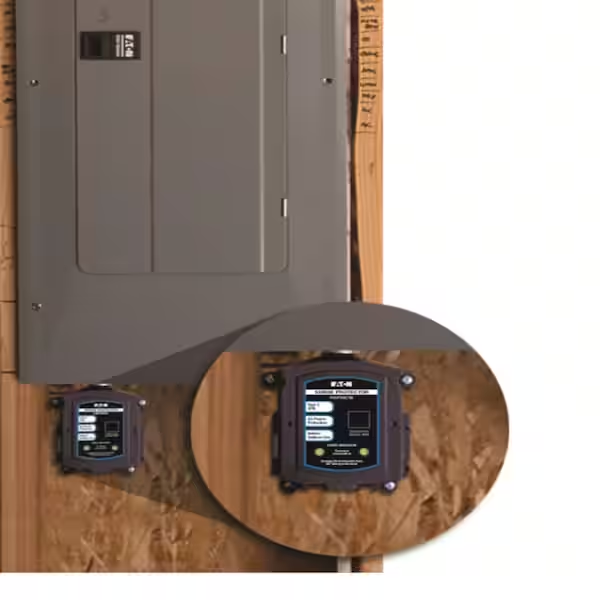
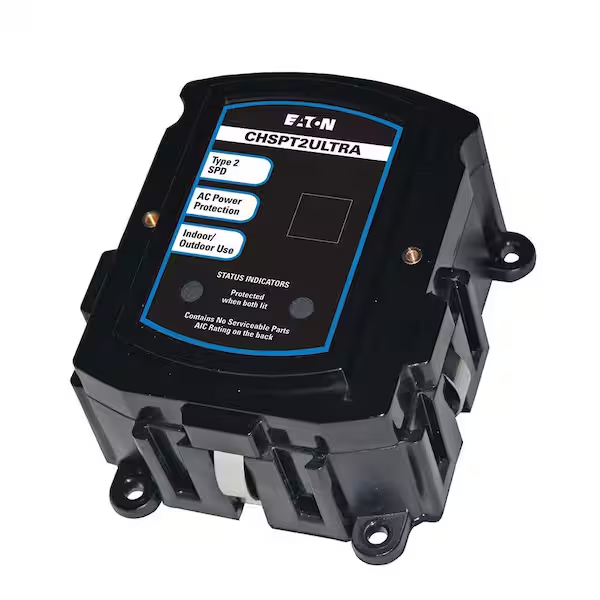
A whole-home surge protective device (SPD) is hard-wired at the main electrical panel or service equipment by a licensed electrician. ESFI is clear that this is professional work — whole-home surge protection must be installed by a qualified electrician, not a homeowner.
It Diverts Excess Voltage Away From the Home's Electrical System
When a voltage spike comes through the service entrance, the SPD provides a low-resistance path that absorbs and redirects the excess energy, keeping it from reaching your wiring, outlets, and equipment. The technical term is "clamping" — the device clamps voltage at a safe level for milliseconds at a time.
It Protects More Than Plug-In Electronics
This is the single biggest reason whole-home surge protection is worth talking about. A power strip can only protect what's plugged into it. Most of the expensive, surge-vulnerable equipment in a modern home isn't plugged into a wall outlet at all:
- HVAC system
- Refrigerator (in many newer kitchens, hard-wired or behind built-in panels)
- Ovens and ranges
- Dishwashers
- Built-in washer and dryer hookups
- Garage door openers
- Built-in lighting and smart switches
- Hardwired smoke and CO alarms
- Home office circuits with multiple devices
- EV charger circuits (depending on configuration)
ESFI specifically distinguishes point-of-use surge protection from whole-home surge protection, noting that whole-home protection helps protect the entire electrical system, including large appliances, outlets, and light switches. That's the part power strips simply can't reach.
Want this for your home? See Whole-Home Surge Protection.
What does whole-home
surge protection cover?
A panel-mounted SPD protects circuits, not just outlets — including most of the equipment a power strip can’t.
Electronics
Plug-in strips help — but only for what's plugged in.
- TVs and AV equipment
- Computers, monitors, docks
- Wi-Fi router and mesh systems
- Gaming consoles
- Smart speakers and hubs
- Security cameras and NVRs
Hard-wired appliances
Most are NOT plugged into a wall. Power strips can't reach them.
- Refrigerator (built-in or hard-wired)
- Range, oven, cooktop
- Dishwasher
- Washer and dryer
- Microwave (built-in)
- Garage door opener
HVAC & mechanical
Surge-vulnerable control boards. $400–$1,500 to replace.
- AC compressor and condenser
- Furnace / heat pump control board
- Smart thermostat
- Water heater (hard-wired)
- Well pump and sump pump
- EV charger circuit
Whole-Home Surge Protection vs. Power Strips
Power Strips Are Not the Same as Surge Protectors
Walk into any hardware store and you'll see both products on the same shelf. Most homeowners use the terms interchangeably. They shouldn't. ESFI specifically notes that power strips and surge protectors are not the same. A basic power strip is just an extension cord with extra outlets — it offers no surge clamping at all.
Plug-In Surge Protectors Only Protect What's Plugged Into Them
Quality plug-in surge protectors are useful — for TVs, computers, routers, gaming consoles, and home office equipment. But by design, they protect only the devices physically plugged into them. They do nothing for hard-wired HVAC, kitchen appliances, garage door openers, smart switches, or your panel itself.
The Best Setup Is Layered Protection
ESFI recommends combining device types: a Type 1 or Type 2 SPD at the service or panel level, plus Type 3 (point-of-use) protection for sensitive electronics. In practical terms, that means:
- Whole-home surge protection at the panel — first line of defense.
- Quality point-of-use surge protectors for TVs, computers, routers, and home office equipment.
- Proper grounding and bonding at the service.
- An updated panel and safe wiring to make all of the above effective.
- Smart storm habits — unplug sensitive electronics before lightning is overhead, not during.
If you're not sure your current power strips are actually protecting anything, M Electric can inspect your panel, grounding, and surge protection options. See Whole-Home Surge Protection.
What Whole-Home Surge Protection Does Not Do
This section matters as much as the rest. Surge protection is a fantastic tool — but it isn't magic, and it isn't a substitute for the rest of a healthy electrical system.
It Does Not Make Your Home Lightning-Proof
Per ESFI, no surge protective device can handle a direct lightning strike. SPDs are engineered to absorb induced surges (from nearby strikes, utility events, or appliance cycling) — not the energy of a direct hit. Homes with very high lightning exposure may also benefit from a dedicated lightning protection system (the rooftop air terminals you sometimes see, often called "lightning rods"), which is different from a panel SPD and serves a different purpose.
It Does Not Fix Bad Wiring or an Overloaded Panel
If your home has outdated wiring, loose neutrals, undersized service, missing ground rods, or chronically overloaded circuits, a surge protector cannot compensate for those issues. Address the foundation first — see Wiring Repair and Panel Upgrades.
It Does Not Replace Generator Safety or Backup Power Planning
Surge protection and generators solve different problems. An SPD reduces damage during voltage events; a generator keeps you running through outages. Both have a place in a serious storm-prep plan. See Generator Installation.
It Does Not Last Forever
Every SPD has a finite "absorption capacity." After enough surge events — or one big one — the device may need replacement. Most quality units have indicator lights or status LEDs that tell you when they've worn out. Ask your electrician how to read them, and check the device after every major Tulsa storm.
Is Whole-Home Surge Protection Worth It for Your Tulsa Home?
The honest answer: it depends on your home, your equipment, and your tolerance for surprise repair bills. Here are the situations where it's most clearly worth it.
You Have Expensive Electronics
Most modern households now have thousands of dollars of microprocessor-driven equipment connected to the same wiring as a 1995-era refrigerator:
- Home office setup (computers, monitors, docks)
- Gaming systems and consoles
- High-end TVs and AV gear
- Wi-Fi routers and mesh systems
- Security cameras and smart locks
- Smart thermostats
- Smart appliances
Replacing any one of those typically costs more than installing a whole-home SPD.
You Have Modern HVAC Equipment
A modern variable-speed compressor or inverter-driven heat pump can have a control board that costs $400–$1,500 to replace, plus labor. HVAC equipment is one of the most surge-vulnerable hard-wired systems in a Tulsa home, especially during summer when it's running constantly.
You Have Frequent Outages or Flickering Lights
Recurrent flickers and trips aren't normal. They're often a sign of grid issues, wiring problems, or equipment that's near end-of-life. Surge protection is part of the answer, but the symptom itself usually deserves an inspection. Don't just bandage it.
You Live in an Older Tulsa Home
Older homes — especially those built before grounding requirements changed — may have ungrounded outlets, two-prong receptacles, aluminum branch wiring, or outdated panels. Surge protection in those homes works best when paired with a grounding upgrade, panel inspection, or wiring repair. See Panel Upgrades and Wiring Repair.
You're Planning an EV Charger or Generator Install
Both upgrades dramatically increase the value of having clean, well-protected power. If you're planning either one this year, fold surge protection and a panel review into the same project. See Generator Installation.
When Surge Protection May Not Be Enough by Itself
Sometimes a whole-home SPD is the right product, but it isn't the *whole* answer. Here are the situations where surge protection should be paired with other electrical work.
Your Panel Is Outdated or Overloaded
Common signs:
- Breakers trip often
- Lights dim noticeably when appliances start
- Panel feels warm or has a faint burning smell
- Visible scorching, rust, or water staining inside the panel door
- No room for new circuits
- Older fuse box, or a panel from a brand widely flagged by insurers as unsafe
If any of those describe your panel, surge protection should be part of a Panel Upgrade, not a workaround.
Your Home Has Grounding Problems
Surge protection depends on a working grounding electrode system. If your ground rods are missing, corroded, undersized, or improperly bonded, the SPD has nowhere to send absorbed energy. A licensed electrician can verify grounding during the same visit they evaluate surge protection.
Your Outlets or Wiring Are Damaged
Warm, loose, dead, discolored, sparking, or scorched outlets aren't a "live with it" situation. They need Electrical Repair or Wiring Repair before any surge upgrade is meaningful.
What to Expect When an Electrician Installs Whole-Home Surge Protection
This is professional work — not a DIY project. Here's what a typical M Electric install looks like.
Step 1: Panel and Grounding Inspection
Before recommending a device, the electrician evaluates:
- Panel age, brand, and condition
- Available space for the SPD (some panels need a sub-panel adapter or dedicated breaker space)
- Service type (overhead or underground), main breaker rating, and amperage
- Grounding electrode system and bonding
- Any existing safety issues that need to be resolved first
Step 2: Selecting the Right Surge Protection Device
The right device depends on your panel, electrical loads, exposure, and protection goals. Type 1 SPDs install on the line side of the main breaker (sometimes outside near the meter) and offer the strongest protection against externally generated surges including nearby lightning. Type 2 SPDs install on the load side, inside the main panel. Many homes do best with one of each, plus point-of-use Type 3 devices on sensitive electronics.
Step 3: Installation at the Panel
The electrician shuts off the main, hard-wires the SPD to a dedicated breaker (or to the line side, depending on type), torques connections to spec, and verifies grounding. This typically takes 30–60 minutes for the device itself, longer if other work is being done at the same time.
Step 4: Testing and Homeowner Walkthrough
Before leaving, the electrician should:
- Confirm the device is energized and its status indicators are normal
- Walk you through the indicator lights and what to check after storms
- Document the install for warranty purposes
- Recommend a re-check schedule, typically annually and after any major storm
Schedule a surge protection evaluation with M Electric before the next Tulsa storm season.
How Much Does Whole-Home Surge Protection Cost in Tulsa?
Cost Depends on the Home and Panel
Pricing varies based on:
- Panel type, brand, and condition
- Whether panel space is available (or whether a sub-panel/dedicated breaker is needed)
- Grounding condition
- Type of device (Type 1, Type 2, or both)
- Whether other work is being done at the same time (panel upgrade, EV charger, generator)
- Warranty tier
For an exact quote, Contact M Electric — we'll give you a flat number after the panel and grounding check.
Compare the Cost to Replacement
Surge protection is one of the few electrical upgrades that pays for itself the first time it does its job. Compare a typical whole-home SPD install to the cost of replacing what it protects:
- HVAC control board: $400–$1,500 (plus labor and downtime)
- Refrigerator: $1,500–$4,000
- Washer or dryer: $700–$2,000
- Smart TV: $500–$3,000
- Home office desktop, monitors, dock: $1,000–$5,000
- Wi-Fi router, mesh system, security NVR: $300–$1,500
- Garage door opener: $300–$700
- Smart switches and home automation hubs: $500–$2,000
One surge event can easily total more than the device, the install, and several years of inspections combined.
Ask About Warranties and Equipment Ratings
Before saying yes to any product, ask:
- What is the surge current rating (in kA)?
- What is the clamping voltage?
- What's the manufacturer warranty? Is there a connected-equipment warranty?
- How do I read the status indicator?
- After a major storm, what should I check?
A good Tulsa electrician will answer all of those without hesitation.
Bottom Line: Should Tulsa Homeowners Install Whole-Home Surge Protection?
For many Tulsa homes, whole-home surge protection is a smart preventive upgrade — especially if you have expensive electronics, modern HVAC equipment, smart devices, a home office, or recurring storm-related outages. The cost is modest relative to what it protects, and the install takes a single appointment.
But it should be installed as part of a complete electrical safety approach: an updated panel, proper grounding and bonding, safe wiring, quality point-of-use surge protectors for sensitive electronics, and smart storm habits during severe weather.

Want to know whether whole-home surge protection makes sense for your home? M Electric can inspect your panel, check your grounding, and recommend the right setup for your Tulsa property.
Frequently asked questions.
Is whole-home surge protection worth it in Tulsa?
+
Yes, it is worth considering for many Tulsa homes. Storms, outages, utility switching, and large appliances cycling can all create damaging surges, and whole-home protection covers hard-wired equipment that plug-in strips cannot reach. It is especially useful for homes with expensive electronics, HVAC equipment, smart devices, EV chargers, or home office setups.
Does whole-home surge protection protect against lightning?
+
It can significantly reduce damage from many surge events, including those induced by nearby lightning, but it cannot guarantee protection from a direct lightning strike. ESFI states that no surge protective device can handle a direct lightning strike.
Do I still need plug-in surge protectors?
+
Yes. ESFI recommends a layered approach: whole-home surge protection at the panel plus quality point-of-use surge protectors for sensitive electronics like computers, TVs, routers, and gaming systems.
Are power strips the same as surge protectors?
+
No. Many power strips are simply extension cords with extra outlets and provide no surge protection. ESFI specifically notes that power strips and surge protectors are not the same.
Can I install a whole-home surge protector myself?
+
No. Whole-home surge protection connects at or near the main electrical panel and must be installed by a qualified electrician. ESFI identifies whole-home surge protection as professional work.
How do I know if my home needs surge protection?
+
Consider it if you have frequent outages, flickering lights, expensive electronics, modern HVAC equipment, smart devices, an EV charger, or an older electrical panel. A licensed electrician can inspect your panel and grounding and recommend the right setup.
Will surge protection stop breakers from tripping?
+
No. Surge protection is not designed to fix overloaded circuits, bad wiring, or a failing panel. If breakers keep tripping, you need an electrical inspection — not just a surge protective device.
How long does a whole-home surge protector last?
+
It depends on the device and the number and size of surge events it absorbs. Many units have indicator lights that signal when they have worn out and need replacement. Ask your electrician how to monitor the device, especially after major Tulsa storms.
- ESFI — Surge Protective Devices
- ESFI — Home Surge Protective Devices
- ESFI — What Are Surge Protective Devices
- ESFI — Lightning Electrical Safety
- ESFI — Lightning Protection: Preventing a Direct Strike
- Schneider Electric — Pros and Cons of Whole House Surge Protectors
- PSO — Outage Reporting and Map
- National Weather Service — Tulsa Forecast Office
- Ready.gov — Thunderstorms & Lightning